by Anne-Marie | Nov 8, 2018 | Entertainment, History |
I fell down a rabbit hole on the internet this week.
You know when you search for one thing and then end up spending hours clicking link after related link?
That’s what I’ve been doing with Basque sheepherding videos.
I love learning about my Basque heritage but especially when it comes to Basques in the United States. And for a lot of our family histories, that means tracing our roots back to Basque sheepherders in the West.
by Anne-Marie | Oct 16, 2018 | Entertainment |
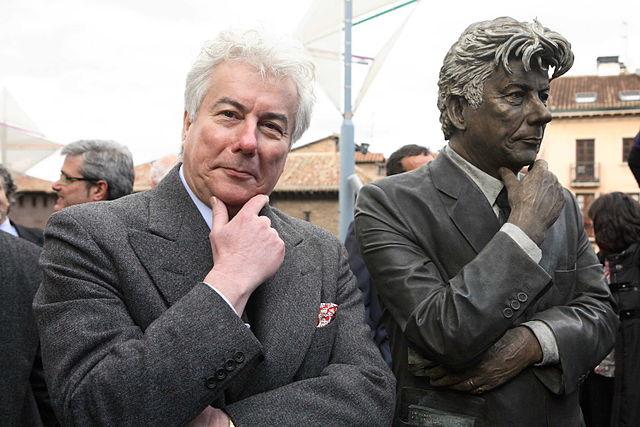
British author Ken Follett has sold more than 160 million copies of his thrillers worldwide over a career that has spanned these past 50 years. Known for keeping his readers on the edges of their seats through historical novels, Follett’s most popular novel, The Pillars of the Earth, has been translated into over 30 languages alone.
The Pillars of the Earth centers on the building of a cathedral during the Middle Ages in the fictional city of Kingsbridge.
Eleven years ago this month, nearly 20 years after The Pillars of the Earth was published, Follett released a sequel, World Without End. This novel is the second of three in the Kingsbridge series and holds a special connection to the Basque Country.
In the novel, structural problems with the cathedral were inspired by events at the Cathedral of Santa Maria in Vitoria-Gasteiz, the capital of the Basque province of Araba and seat of the Basque Autonomous Government.
According to the Center for Basque Studies, Follett conducted research trips to Vitoria-Gasteiz for the novel and presented the Spanish translation of the book in Vitoria-Gasteiz.
by Anne-Marie | Oct 2, 2018 | Entertainment |
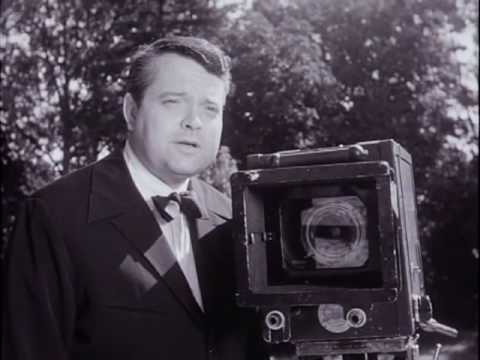
This month marks the 63 year anniversary of when award-winning actor, director, writer, and producer Orson Welles released a documentary series on the Basque Country.
“The Land of the Basques” made up the first two episodes of his Around the World with Orson Welles series for the BBC. Filmed primarily in Iparralde (Northern Basque Country), the documentary provides a brief insight into the Basque people and rural Basque culture in the 1950’s.
Welles attempts to define a Basque, but can mostly only come up with things a Basque is not: French or Spanish. He discusses the French-Spanish border, calling it “more of a theory than a fact” for the people who live in the region.
This is 1955. Dictator Francisco Franco is in power and the border between the two countries is closed, although Welles highlights the active smuggling business across the border. The show also explains how Basques worked together on both sides of the border to hunt pigeons.
Welles touches on the Basque language being banned under Franco. His analysis: “So of course, Basques will be Basques, their language is spoken just a little bit more on the Spanish side.” Indeed, he captures the contrarian spirit and political resistance of the times in such subtleties.
by Anne-Marie | Sep 25, 2018 | Euskara |
I recently read an interesting study from 2016 about the prevalence of Euskara in the Basque Country across all 7 provinces.
The study was funded by Eusko Jaurlaritza (the Basque Government), Euskarabidea (Government of Navarra), and Euskararen Erakunde Publikoa (the Public Office of Euskara).
I’ve laid out the main findings of the study in this infographic. Feel free to share it with your friends on social media!
by Anne-Marie | Sep 18, 2018 | Culture |
When my parents named me, it was important for them to find a name that worked in both English and in French. English because that would be the language of my environment and French because that is the language both of my parents and their families speak.
They settled on Anne-Marie, inadvertently demonstrating how very Catholic they are in the process.
So I missed out on getting a Basque first name. (Only Aita’s side speaks Basque.)
But it just goes to show how our first names say a lot about where we come from and the types of people we come from. After all, it is our parents who choose our names, so they may be more of a reflection on them than ourselves.
Where many Basques are concerned, naming is an important political practice. For centuries in both France and Spain, Basque names were not legally admissible.
With laws being reformed more recently, the Basque Country and its diaspora are seeing a resurgence in Basque first names.
Today, most Basque first names can legally be registered with local authorities.
But I hate to tell you, the correct spellings of some Basque names still cannot be registered in France and parts of the United States.

by Anne-Marie | Sep 13, 2018 | Entertainment |
The Food Network show Diners, Drive-Ins and Dives is a staple on American cable television. Over the years, the show has visited 3 Basque American restaurants!
The reality show follows host Guy Fieri as he takes road trips across the United States visiting independent eateries.
On the air since 2007, the show has run an impressive 26 seasons with a total of 260 episodes. It has been nominated for 5 Primetime Emmy Awards in the Outstanding Structured Reality Program category, as well as several Emmy nominations for host Guy Fieri.