by Anne-Marie | Oct 30, 2018 | Travel |
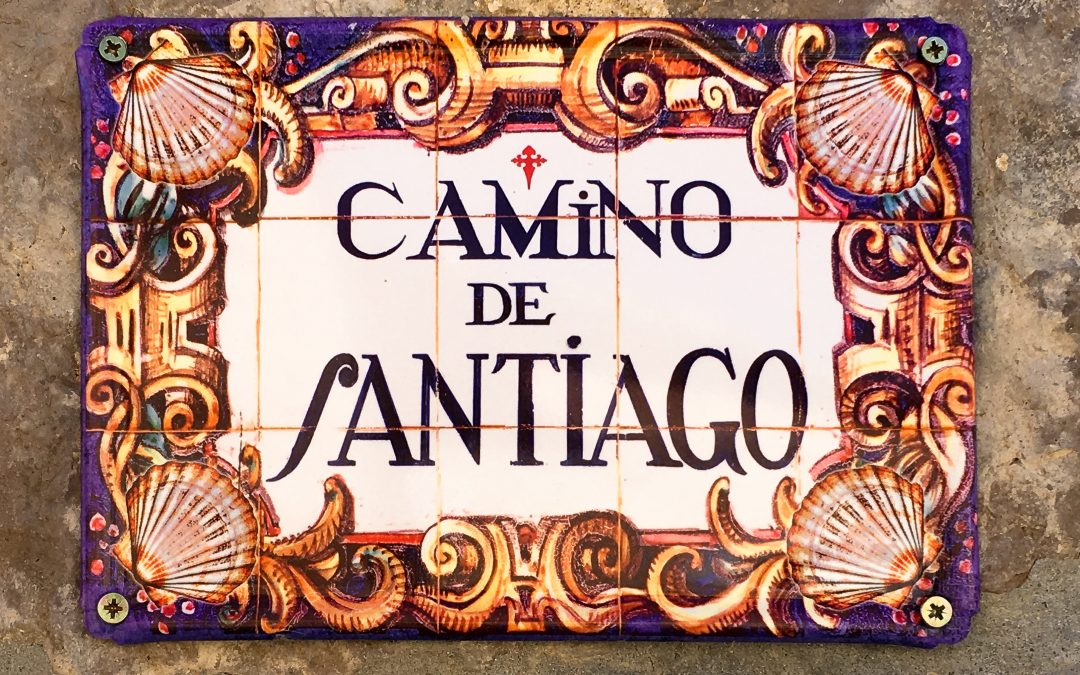
This time last year, I finished walking the Camino de Santiago.
I headed out from Saint Jean-Pied-de-Port in the Basque Country, crossed the Pyrenees on Day 1, and kept walking for 36 consecutive days until I reached the Galician coast at Finisterre on the evening of October 31st.
I covered a distance of almost 600 miles in a little over a month. Walking by myself every day with everything I needed in a 20 pound backpack (I could have packed lighter but your girl likes her trail snacks).
For those of you who don’t know what the Camino de Santiago is, a brief introduction: The Camino is a Catholic pilgrimage that dates back to the Middle Ages (which in the last few decades has been co-opted as an ultra toursity walking holiday and fitness challenge).
People walk (or cycle or ride horseback) from all over Europe to the Cathedral in Santiago de Compostela, where the remains of Saint James, one of Jesus’ Apostles, are said to be held.
The Camino has become a bit of a rite of passage for some of us in the Basque diaspora, especially for those of us whose families come from regions near the pilgrimage routes.
When I was walking the Camino, I even ran into another Basque American woman from San Francisco. Small world!

by Anne-Marie | Oct 23, 2018 | Events |
There’s an interesting event coming up in the Basque American community next week that I’ve been asked to share information about. It is to commemorate and educate about the 1937 Nazi bombing of Gernika.
If you’re around Reno, Nevada next Friday, November 2nd, the Center for Basque Studies is hosting Etxea: Memoirs of Gernika at 7PM in the UNR Wells Fargo Auditorium. Admission is free!
A Basque dance group from Lamoille, Nevada, Ardi Baltza Kontalari, will be performing at the event.
Ardi Baltza has been catching my eye on social media for a while now because they’re doing something different from a lot of the Basque dance groups in the US. They mix traditional Basque dance steps with lyrical and contemporary dance in their own unique choreographies to evoke a theme.
by Anne-Marie | Oct 16, 2018 | Entertainment |
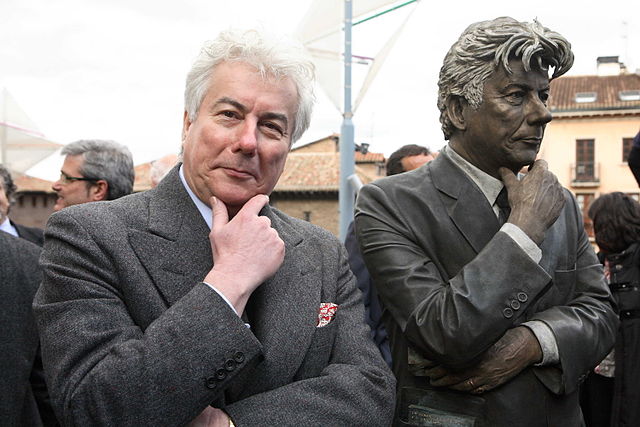
British author Ken Follett has sold more than 160 million copies of his thrillers worldwide over a career that has spanned these past 50 years. Known for keeping his readers on the edges of their seats through historical novels, Follett’s most popular novel, The Pillars of the Earth, has been translated into over 30 languages alone.
The Pillars of the Earth centers on the building of a cathedral during the Middle Ages in the fictional city of Kingsbridge.
Eleven years ago this month, nearly 20 years after The Pillars of the Earth was published, Follett released a sequel, World Without End. This novel is the second of three in the Kingsbridge series and holds a special connection to the Basque Country.
In the novel, structural problems with the cathedral were inspired by events at the Cathedral of Santa Maria in Vitoria-Gasteiz, the capital of the Basque province of Araba and seat of the Basque Autonomous Government.
According to the Center for Basque Studies, Follett conducted research trips to Vitoria-Gasteiz for the novel and presented the Spanish translation of the book in Vitoria-Gasteiz.
by Anne-Marie | Oct 8, 2018 | History |
Today is Indigenous Peoples’ Day. You may know it as Columbus Day.
As an American, I am ashamed on this day for our history as a country.
As a Basque American, even more so.
Let me explain.
Growing up in American schools, we didn’t learn much about the genocide and abuse of Native Americans throughout US history. Only in high school did the curriculum start to touch on these issues, but even then it was for a brief discussion of smallpox blankets and a unit on The Trail of Tears. Then we all moved on to other things.
Until that point in my education, it had all been happy relations between Pilgrims and Indians for Thanksgiving celebrations and the “cooperation” of Native Americans in “helping” Spanish monks build up California in the colonial Mission system.
Not a word on rape, murder, execution, massacres, genocide, enslavement, forced Christianization, forced removal, transgenerational trauma, cultural appropriation, and the numerous other inhuman acts European colonizers committed against Native Americans.
The little knowledge I have on these topics (I do not by any means claim to be an expert) has to do with readings I did outside of American education.
But for years growing up, whenever I learned of the abuse of Native Americans, I felt some small sense of security that at least my people were not colonizers.
My family were recent immigrants to the United States and had no role in stealing Native American lands and oppressing their cultures and languages. For centuries my family were stuck in rural France, working the land, and being oppressed in their own way by the French monarchy and subsequent Republics. Right?
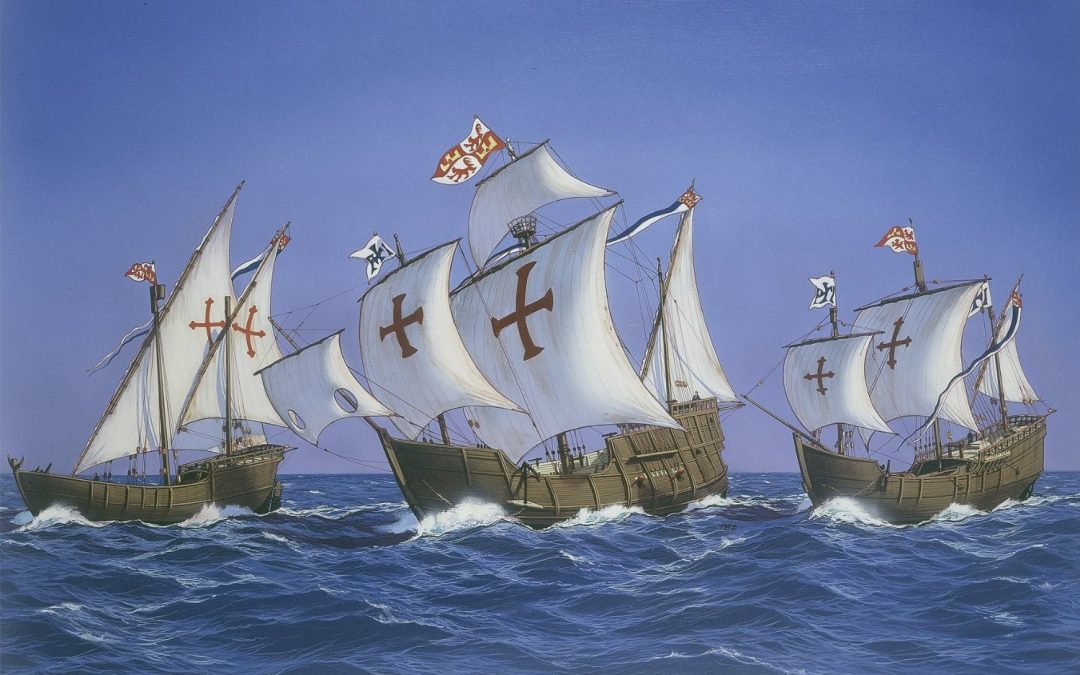
But every once in a while I would hear Basque people mention something about how the men who sailed with Christopher Columbus were Basque, that Columbus’ ships were made in the Basque Country. One theory even holds that Columbus himself was Basque.

by Anne-Marie | Oct 2, 2018 | Entertainment |
This month marks the 63 year anniversary of when award-winning actor, director, writer, and producer Orson Welles released a documentary series on the Basque Country.
“The Land of the Basques” made up the first two episodes of his Around the World with Orson Welles series for the BBC. Filmed primarily in Iparralde (Northern Basque Country), the documentary provides a brief insight into the Basque people and rural Basque culture in the 1950’s.
Welles attempts to define a Basque, but can mostly only come up with things a Basque is not: French or Spanish. He discusses the French-Spanish border, calling it “more of a theory than a fact” for the people who live in the region.
This is 1955. Dictator Francisco Franco is in power and the border between the two countries is closed, although Welles highlights the active smuggling business across the border. The show also explains how Basques worked together on both sides of the border to hunt pigeons.
Welles touches on the Basque language being banned under Franco. His analysis: “So of course, Basques will be Basques, their language is spoken just a little bit more on the Spanish side.” Indeed, he captures the contrarian spirit and political resistance of the times in such subtleties.