by Anne-Marie | Sep 25, 2018 | Euskara |
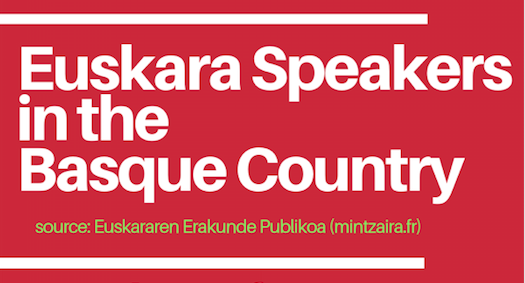
I recently read an interesting study from 2016 about the prevalence of Euskara in the Basque Country across all 7 provinces.
The study was funded by Eusko Jaurlaritza (the Basque Government), Euskarabidea (Government of Navarra), and Euskararen Erakunde Publikoa (the Public Office of Euskara).
I’ve laid out the main findings of the study in this infographic. Feel free to share it with your friends on social media!
by Anne-Marie | Sep 18, 2018 | Culture |
When my parents named me, it was important for them to find a name that worked in both English and in French. English because that would be the language of my environment and French because that is the language both of my parents and their families speak.
They settled on Anne-Marie, inadvertently demonstrating how very Catholic they are in the process.
So I missed out on getting a Basque first name. (Only Aita’s side speaks Basque.)
But it just goes to show how our first names say a lot about where we come from and the types of people we come from. After all, it is our parents who choose our names, so they may be more of a reflection on them than ourselves.
Where many Basques are concerned, naming is an important political practice. For centuries in both France and Spain, Basque names were not legally admissible.
With laws being reformed more recently, the Basque Country and its diaspora are seeing a resurgence in Basque first names.
Today, most Basque first names can legally be registered with local authorities.
But I hate to tell you, the correct spellings of some Basque names still cannot be registered in France and parts of the United States.

by Anne-Marie | Sep 13, 2018 | Entertainment |
The Food Network show Diners, Drive-Ins and Dives is a staple on American cable television. Over the years, the show has visited 3 Basque American restaurants!
The reality show follows host Guy Fieri as he takes road trips across the United States visiting independent eateries.
On the air since 2007, the show has run an impressive 26 seasons with a total of 260 episodes. It has been nominated for 5 Primetime Emmy Awards in the Outstanding Structured Reality Program category, as well as several Emmy nominations for host Guy Fieri.

by Anne-Marie | Sep 5, 2018 | Sports |
The US Open is going on in the world of tennis right now, and I wanted to take a minute to highlight one of the most successful Basque athletes of our time, tennis pro Garbiñe Muguruza.
She formerly ranked #1 in the world by the Women’s Tennis Association, but Muguruza was unfortunately just knocked out of the competition last week by Czech qualifier Karolina Muchova.
Despite this setback, Muguruza is still a Basque athlete to root for, with six singles titles and five doubles titles earned in her relatively short career. The 24-year-old has only been playing professionally since 2012.
Two of Muguruza’s titles were at Grand Slam tournaments, seeing her winning the 2016 French Open and Wimbledon in 2017. In recognition of her accomplishments, the International Tennis Federation named Muguruza World Champion last year.
by Anne-Marie | Aug 29, 2018 | History |
Several people have asked on the Hella Basque Instagram account how they can learn more about Basque culture, and I opened the question up to our Facebook page.
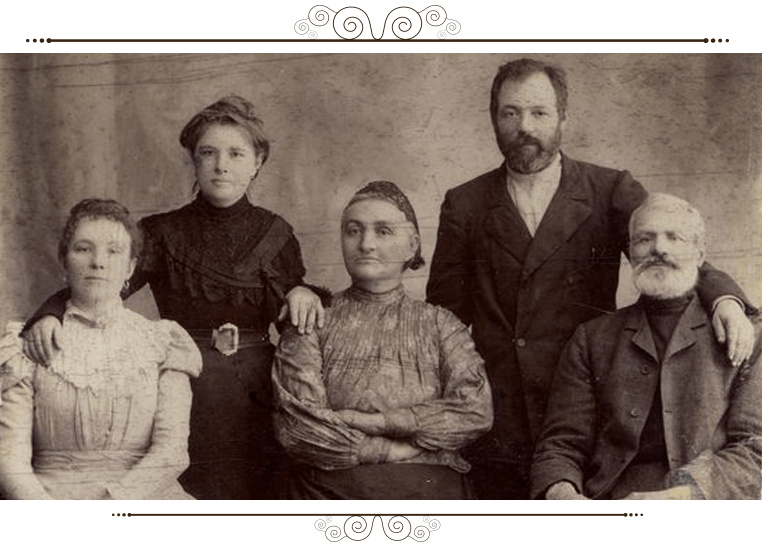
For many Basque Americans, The Basque History of the World: The Story of a Nation by Mark Kurlansky has been essential to discovering more about the Basques throughout history, especially in regards to the language, culture, and origins of the Basque people.
Linguists have determined Euskara, the Basque language, to be a language isolate, pre-Indo European and unrelated to any other language in the world.
Scientists aren’t sure where the Basques came from, but the latest research speculates that the Basques came from a group of farmers on the Iberian Peninsula that lived between 3,500 and 5,500 years ago.
These ancestors would have become isolated from later waves of migration from central Europe and North Africa around 5,000 years ago, as Basques do not show any genetic ties to those groups. By contrast, 10% to 25% of non-Basques on the Iberian Peninsula have genomes related to these central European and North African farmers.
But I find one element that makes the Basques unique to be most interesting, and that is the question of blood type.